Blog
Blog
Generative Engine Optimisation vs SEO: What Multi-Location Brands Need to Know in 2026

For years, the goal was simple: rank on Google. Get your locations into the Local 3-Pack, optimise your Google Business Profile, and make sure your NAP data was consistent. That was the game, and most multi-location brands got reasonably good at playing it.
But the game has changed. Consumers are increasingly turning to AI assistants, such as ChatGPT, Gemini, and Perplexity, and asking them direct questions: “Where’s the nearest pharmacy with late opening hours?” or “Which coffee chain has the best reviews near me?” These platforms don’t serve up a list of ten blue links. They give a single, confident answer. And if your brand isn’t in that answer, you don’t exist.
Welcome to the age of generative engine optimisation.
What Is GEO?
GEO (Generative Engine Optimisation) is the practice of making your brand visible in AI-generated answers. Where SEO helps you rank in a list of search results, GEO helps you become the brand an AI assistant recommends when someone asks a local or category-level question.
The distinction matters more than it might seem. An AI assistant doesn’t show the user ten options and let them decide. It synthesises available data and makes a single recommendation. Your brand either earns a mention or it doesn’t.
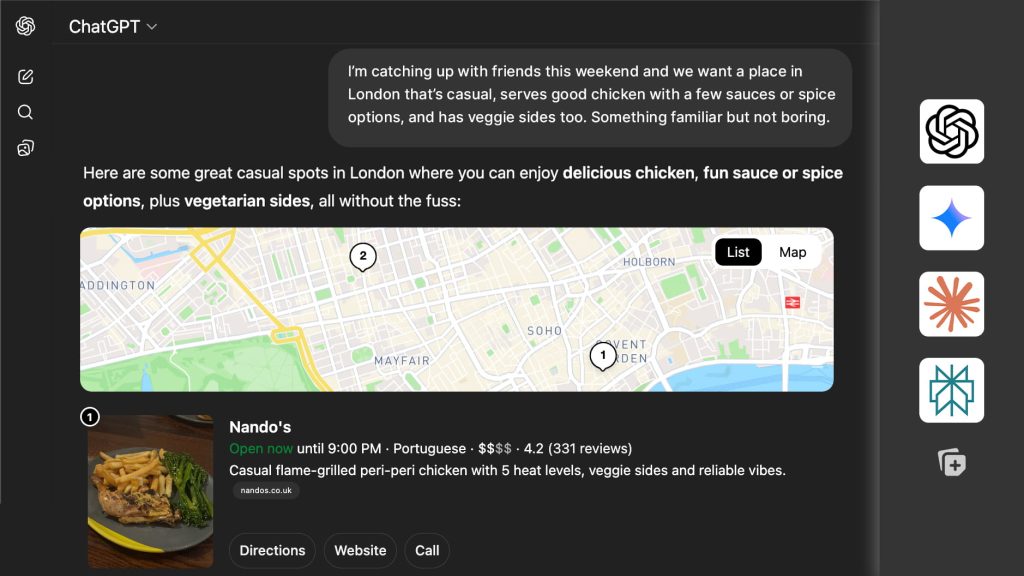
What Is the Difference Between GEO and SEO?
SEO and GEO share the same foundations but serve different discovery channels.
SEO (Search Engine Optimisation) focuses on ranking in traditional search engines. For multi-location brands, that means appearing in Google Maps, winning the Local 3-Pack, and ensuring location pages perform well in organic search results.
GEO (Generative Engine Optimisation) focuses on being recommended by AI assistants. Instead of ranking in a list, you’re aiming to be the brand a model surfaces when a consumer asks a conversational, local question.
The key difference: SEO is about being findable. Generative engine optimisation is about being chosen.
The scale of the shift is worth pausing on. According to a Whitespark study, AI Overviews now appear on around 68% of local searches, and nearly half of consumers have already used a conversational AI tool to find a local business. Those numbers are moving in one direction only.
How Do AI Assistants Decide What to Recommend?
AI assistants don’t browse the internet the way a search engine crawler does. They build answers from structured, high-quality data they can access across platforms. The brands most likely to be recommended share three characteristics:
- Consistent data: Business name, address, phone number, and opening hours are identical across every platform
- Complete profiles: Rich descriptions, accurate categories, relevant attributes, and up-to-date photos give AI models more to work with when constructing an answer
- Strong reputation: A well-managed review presence signals trustworthiness to AI systems in much the same way it signals trustworthiness to human customers
If your data varies from one platform to the next, an AI model will either flag the inconsistency or treat your locations as separate entities. Neither outcome helps your visibility.
It’s also worth understanding where AI pulls its data from. It’s not just your Google Business Profile or your website homepage. AI scrapes from directories, aggregators, cached pages, and sources you may never have thought to check: an outdated listing from five years ago, a page that should have been taken down when your opening hours changed, even a PDF buried on a forgotten corner of your site. The AI has no way of knowing which version is current. In some cases it will simply omit your brand. In others, it will recommend you with the wrong information, or even hallucinate details based on something loosely related it found elsewhere. The customer acts on it, shows up, and the trust is gone.
Do Multi-Location Brands Have to Choose Between SEO and GEO?
No. Generative engine optimisation is not a replacement for SEO. Traditional search is still a major driver of local discovery, and Google Maps remains one of the most important platforms for multi-location brands. The brands that win in 2026 are investing in both simultaneously.
The good news is that the foundations are largely shared. Consistent data, complete profiles, a strong review presence, and well-structured location pages all improve both SEO rankings and generative engine optimisation visibility. You’re not starting from scratch. You’re extending what good local marketing already looks like.
That said, GEO does introduce some new priorities. AI-readable content matters more than it used to. How your brand is described, the language used in your profiles and store pages, and even the quality of your images (which AI systems can now interpret) all feed into how confidently an AI assistant can recommend you.
How Can Multi-Location Brands Improve Their GEO Visibility?
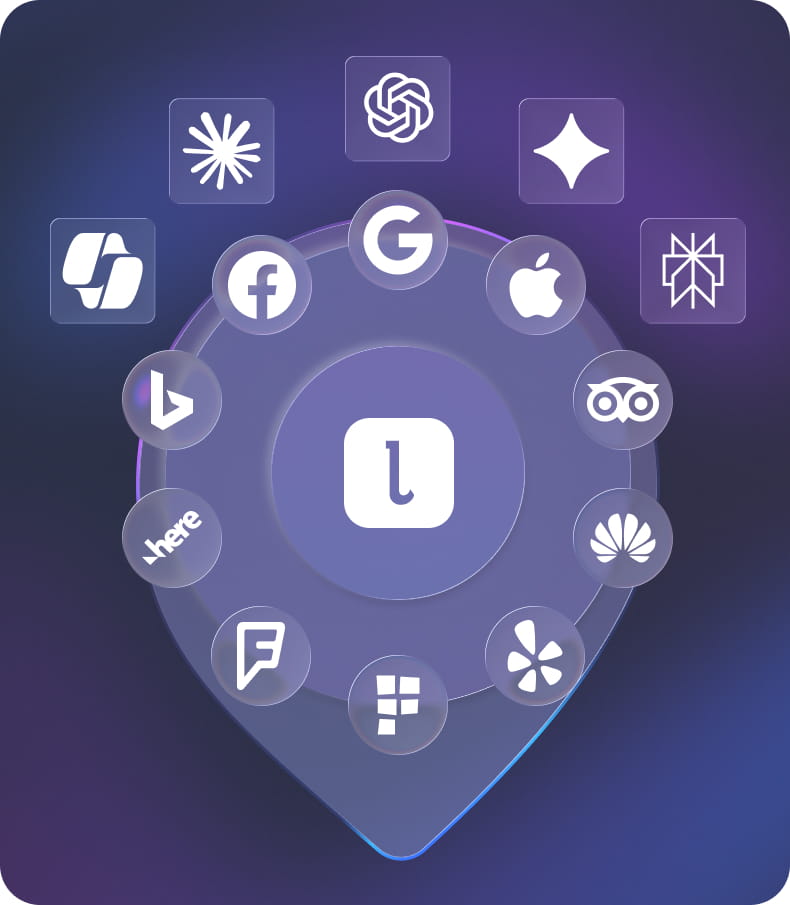
The first step is understanding where you currently stand. Before you can improve your generative engine optimisation visibility, you need to know how ready your digital infrastructure actually is.
Localistico’s AI Readiness Score analyses each location across key signals, including profile completeness, data consistency, review sentiment, and technical accessibility for AI agents, and gives you a clear, actionable score per location. Localistico Intelligence then surfaces automatic suggestions across your portfolio, flagging missing attributes, unoptimised descriptions, and incomplete opening hours, with estimated impact per fix so your team can prioritise effectively.
For brands that want to go further, the AI Visibility Index measures your Share of Voice in AI assistant responses to local queries, benchmarked against your local competitors. It tells you not just whether you’re visible, but where you’re winning and where there’s ground to recover.
Key Takeaways
- GEO is the practice of making your brand visible in AI-generated answers; SEO is the practice of ranking in traditional search engines
- AI assistants favour brands with consistent data, complete profiles, and a well-managed reputation
- GEO and SEO are complementary, not competing: the same data quality that improves your search rankings also improves your AI visibility
- The brands that act now will build a head start before AI search becomes the dominant local discovery channel
AI search is not a future concern. It is a present reality. Consumers are already using AI assistants to make local decisions, and the brands with the most consistent, complete, and trustworthy presence are the ones being recommended.
Want to see how your brand scores on AI readiness? Request a demo and we’ll show you exactly where you stand.