Blog
Blog
Festive Local Marketing: Tips for Multi-Location Brands

A customer looking for a last-minute Christmas present doesn’t have time to visit three shops to find what they need. They want to know who’s open, what’s available and where they can get it. And increasingly, they’re looking for those answers across Google Maps, search engines and AI assistants.
For brands managing hundreds or thousands of locations, making sure those answers are accurate isn’t always straightforward. Particularly during the festive season, when opening hours change, promotions vary by market and customers expect information to be up to date.
The good news is that many of the things that make a difference are relatively simple. And while AI is creating new ways for customers to discover businesses, it can also help marketing teams manage some of the work that comes with the busiest shopping period of the year.
So what should brands prioritise before the festive rush?
Start with the basics: Can customers trust your opening hours?
Imagine someone travelling across town on Christmas Eve to pick up a last-minute gift, only to discover that the shop closed two hours earlier than Google Maps suggested.
It’s frustrating for the customer, but it’s also an avoidable problem for the business. An incorrect opening time can mean a lost sale, a negative review and a customer who may think twice before visiting again.
During the festive season, this becomes particularly important. Opening hours often change around Christmas Eve, Christmas Day, Boxing Day and New Year’s Eve. In some markets, there are additional holidays to consider, such as Constitution Day in Spain or Epiphany on 6 January.
For brands operating across several countries, a single festive calendar isn’t enough. Even within the same country, regional holidays and individual store arrangements can differ.
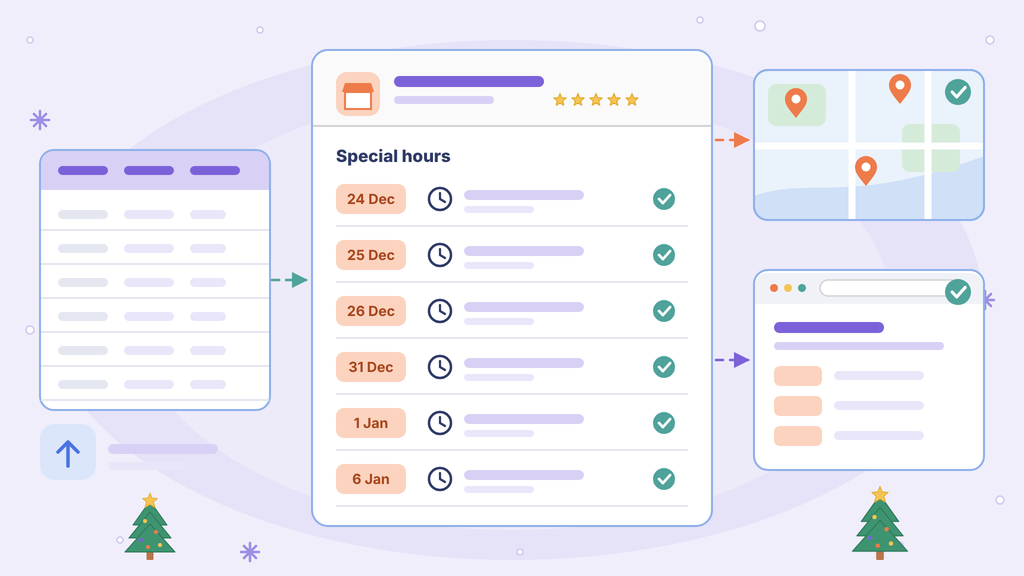
The priority should be to make sure every location’s special hours are accurate, published in advance and consistent across the platforms customers use.
Ideally, special hours should be confirmed and published two to three weeks before the relevant dates, including early closures and exceptional openings. It’s also worth checking that your Store Pages reflect the same information customers see on Google Maps and other platforms, and that changes have actually been published. Saving an update internally doesn’t necessarily mean it has reached every external platform.
Google also recommends keeping special hours updated so customers know when a business is open during holidays or other exceptional periods. You can find more information in Google’s official guidance on special hours.
Localistico allows teams to manage special hours across multiple locations using bulk editing or file imports, rather than updating each profile individually. You can find the process in our guide to managing regular and special opening hours.
Think about what customers are actually searching for
Opening hours are important, but they’re only one part of the information customers need during the festive season.
Consider two shops selling similar products. Both are open on Christmas Eve, but only one has updated its profile to show that it offers gift wrapping, click and collect and a selection of seasonal products.
A customer searching for somewhere to buy a last-minute gift may find both businesses. But the second has made it much easier to understand whether it can meet their needs.
This is particularly relevant as local discovery becomes more conversational.
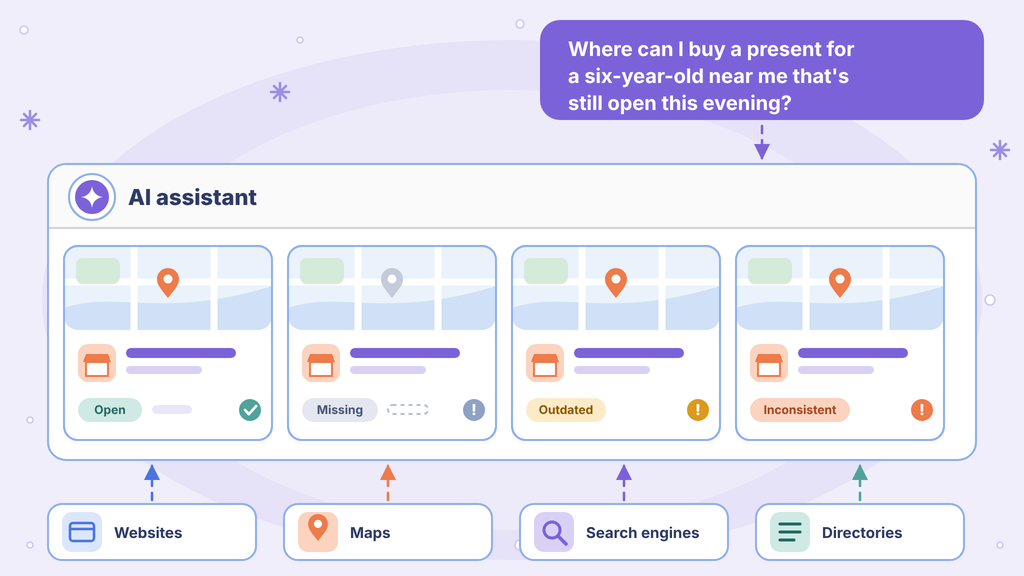
Instead of searching for “toy shop Madrid”, someone might ask an AI assistant, “Where can I buy a present for a six-year-old near me that’s still open this evening?”
The answer may draw on information from business websites, search engines, maps, directories and other online sources. Different AI systems use different sources, and their recommendations aren’t always complete or accurate. But the underlying challenge for brands is familiar: if information about a location is missing, outdated or inconsistent, it becomes harder for customers and discovery platforms to understand what that location offers.
That makes the festive season a good opportunity to review the details that might influence a customer’s decision.
Make your locations easier to choose
There are several relatively simple improvements worth prioritising:
Update your photos and location information. Seasonal window displays, store entrances, available services and relevant attributes can help customers understand what to expect. Make sure the information reflects what is actually available at each location. See how to manage photos in Localistico.
Check your social media links. Google may automatically associate social media accounts with your Business Profile, so it’s worth checking that the right Instagram, Facebook and other profiles are connected to each location. This is particularly useful during the festive season, as Google may also display posts from those accounts directly on your Business Profile. If you’re sharing Christmas offers, seasonal products or local events on Instagram, that content could reach customers searching for your business on Google too. You can manage your Google social links through Localistico.
Showcase relevant products, services and menus. If your locations offer seasonal gift sets, Christmas menus or specific services, make that information easy to find. Depending on the business category, Google Business Profiles can display products, services and menus.
Make it easy to take the next step. A customer who finds the right restaurant should be able to make a reservation. Someone looking for a service should know how to book an appointment. Review your action links and make sure they lead to the right destination.
Keep your Store Pages up to date. Your website remains an important source of information about individual locations. Special hours, available services, local promotions and booking options should be easy to find and consistent with your external profiles. Where appropriate, LocalBusiness structured data can also help Google understand details such as a location’s address and opening hours.
None of these activities is particularly new. But as customers move between search engines, maps, websites and AI assistants, having complete and reliable information across those channels becomes increasingly valuable.
Use seasonal campaigns to turn discovery into action
The festive period creates several opportunities to give customers a reason to visit: extended shopping hours, a limited-time offer, a Christmas menu, an in-store event or the start of January sales.
For multi-location brands, the challenge is making those campaigns relevant to each market without creating unnecessary work for central marketing teams.
A Black Friday promotion might run across the entire network, while late-night shopping hours apply only to selected stores. A restaurant group might promote different festive menus depending on the location. And a retailer operating across Europe will need to account for different shopping traditions and public holidays.
Rather than publishing the same message everywhere, brands can adapt their communications to what is actually happening in each location.
Google Business Profile posts can help communicate relevant offers, updates and events, while local advertising can support campaigns where reaching nearby customers is particularly important.
With Localistico, teams can manage posts and campaigns across multiple locations, making it easier to coordinate central campaigns while keeping the information locally relevant.
Don’t let the seasonal increase in reviews go unnoticed
For many businesses, more customers also means more feedback.
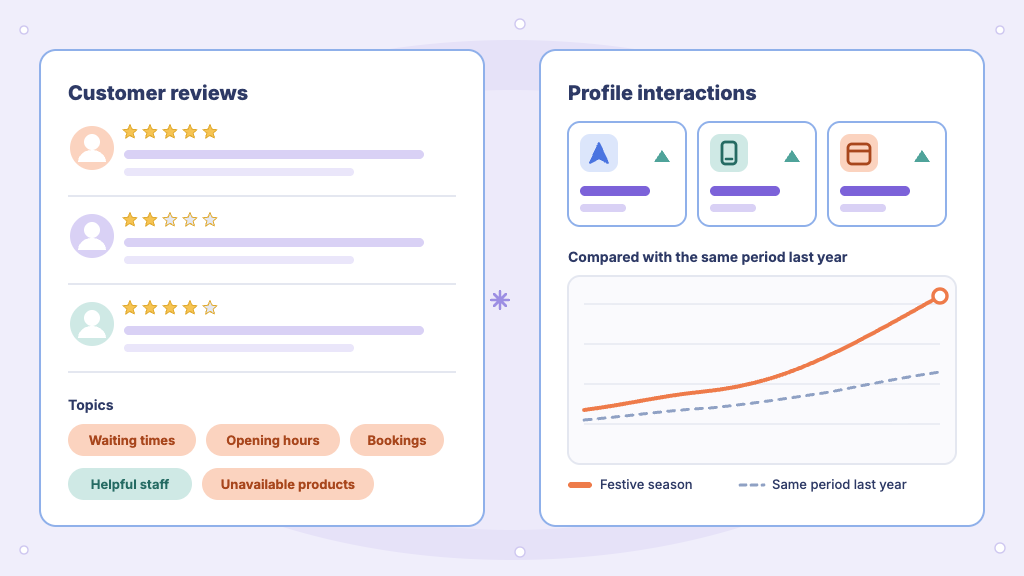
Some of that feedback will be positive: helpful staff, successful last-minute purchases or a particularly good experience. Other reviews may highlight longer waiting times, unavailable products, incorrect opening hours or problems with bookings.
During a busy period, it can be tempting to focus entirely on responding to reviews as quickly as possible. But the information within those reviews can be just as valuable as the responses themselves.
If several customers mention long queues at one location, that may be worth investigating. If customers repeatedly praise a particular service, it could be something to highlight more prominently in local communications.
For brands with hundreds of locations, identifying those patterns manually isn’t straightforward.
AI-powered review analysis can help teams group feedback by topic, identify recurring issues and understand where attention is needed. AI-assisted replies can also reduce the time spent drafting responses, although they still need to be accurate, appropriate and consistent with the brand’s voice.
The objective isn’t simply to answer more reviews. It’s to use customer feedback to understand what’s happening across the business while there’s still time to act.
Where AI can make a practical difference
For marketing teams managing large location networks, one of AI’s biggest opportunities is reducing the manual work involved in keeping everything running smoothly.
Consider the effort required to prepare hundreds of locations for the festive season: checking information, creating local content, monitoring reviews, comparing performance and identifying where something needs attention.
Much of that work is repetitive, but it still requires local knowledge and judgement.
AI can help teams manage it more efficiently.
For example, Localistico’s AI Content & SEO Assistant can support the creation of location-specific content, while AI Review Topics Analysis helps identify patterns in customer feedback. AI-powered insights and suggestions can also help teams understand performance and identify potential improvements without having to analyse every location individually.
There’s also the question of whether AI assistants can find and recommend your locations in the first place.
Localistico’s AI Readiness Score helps assess how well your location information supports AI discovery, while the AI Visibility Index provides insights into how your brand appears in relevant AI-generated recommendations compared with competitors.
Having accurate information creates a stronger foundation for discovery, although it doesn’t guarantee that an AI assistant will recommend your business.
You can explore these capabilities in more detail on our AI Features page.
How do you know if your festive local marketing is working?
After putting so much effort into preparing your locations and planning campaigns, you’ll want to understand what difference those activities are making.
A location might receive more views on Google Maps after updating its profile, but are those views translating into actions? Are more customers requesting directions, calling the store or clicking through to make a booking? And are your seasonal campaigns generating interest across all locations, or only in certain markets?
Looking at these signals together can help you understand what’s working and where there’s room for improvement.
For multi-location brands, it’s particularly useful to compare performance across locations and regions. You might discover that stores promoting extended opening hours are receiving more direction requests, or that a particular festive campaign is generating more engagement in one market than another.
But comparisons between locations only tell part of the story. Looking at results against the weeks leading up to the festive season, or the same period last year, can help put those changes into context. It’s also worth considering differences in store size, opening hours, market conditions and the campaigns running in each location.
Customer reviews add another layer of insight. An increase in complaints about waiting times or unavailable products, for example, could reveal operational issues that aren’t immediately visible in your marketing reports.
Of course, not every profile interaction translates into a store visit or sale. And an increase in direction requests or bookings doesn’t necessarily mean a particular campaign caused it. But monitoring these signals together can help build a clearer picture of how customers are engaging with your locations.
With Localistico, you can bring location-level performance data together to identify trends, compare results across your network and understand where your teams should focus their attention.
These insights can also help you make better decisions about future campaigns, local content and the information customers need throughout the year.
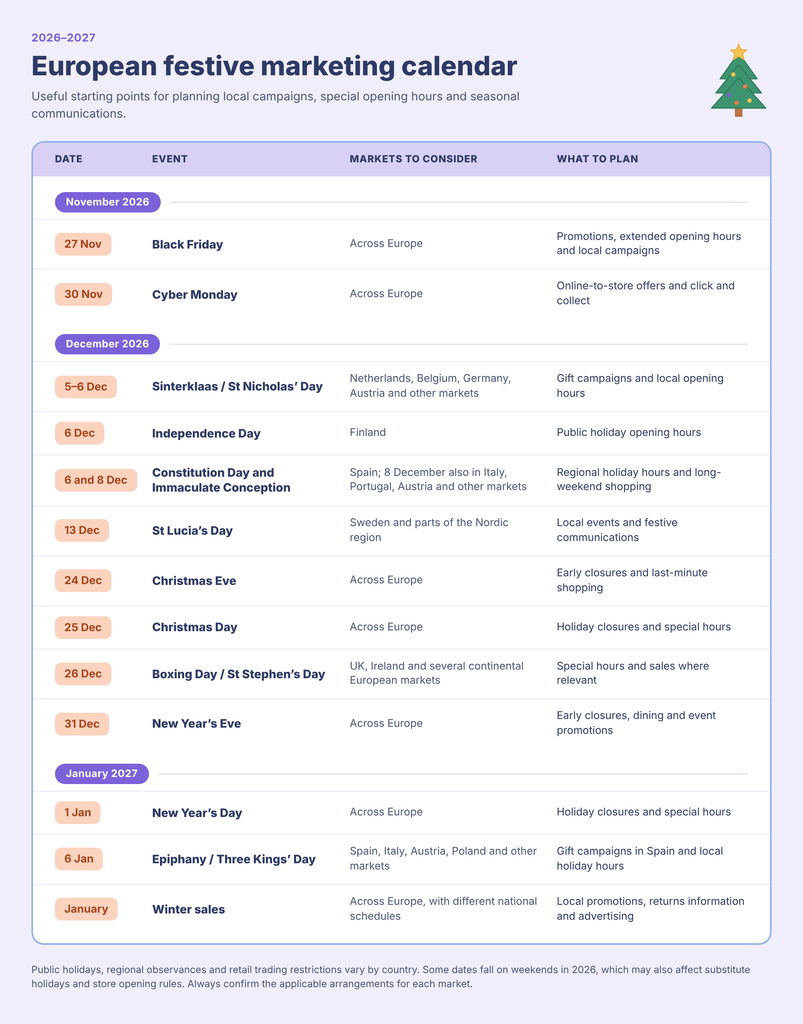
Your European festive marketing calendar: 2026–2027
The festive shopping period doesn’t follow exactly the same calendar everywhere.
Black Friday and Christmas are important across many European markets, but local traditions, public holidays and shopping patterns can make a significant difference to when customers visit stores and what they’re looking for.
The following dates are useful starting points for planning local campaigns, special opening hours and seasonal communications.
A final check before the festive rush
Before the busiest weeks begin, it’s worth making sure a few things are covered:
☐ Special opening hours checked and published across all locations.
☐ Location profiles updated with relevant products, services and photos.
☐ Social media links checked and connected to the correct profiles.
☐ Store Pages, booking links and other customer actions tested.
☐ Seasonal campaigns adapted to local markets.
☐ Customer reviews monitored and recurring issues identified.
☐ Location data and AI visibility reviewed for potential gaps.
☐ Profile interactions, campaign performance and review trends monitored.
The opportunity is bigger than the festive season
The festive season makes something particularly clear: customers don’t think about location data, listings or marketing channels. They simply want to know where they can find what they need, whether a store is open and how to get there.
For brands managing hundreds or thousands of locations, making that experience straightforward takes a lot of coordination behind the scenes. And while AI can help reduce some of that work, the objective remains the same: making it easier for customers to find and choose your business.
Make local marketing easier to manage
Localistico helps multi-location brands manage their location information, coordinate local campaigns, monitor customer feedback and understand their visibility across search, maps and AI.
Explore the platform or book a demo to see how it works across your locations.